
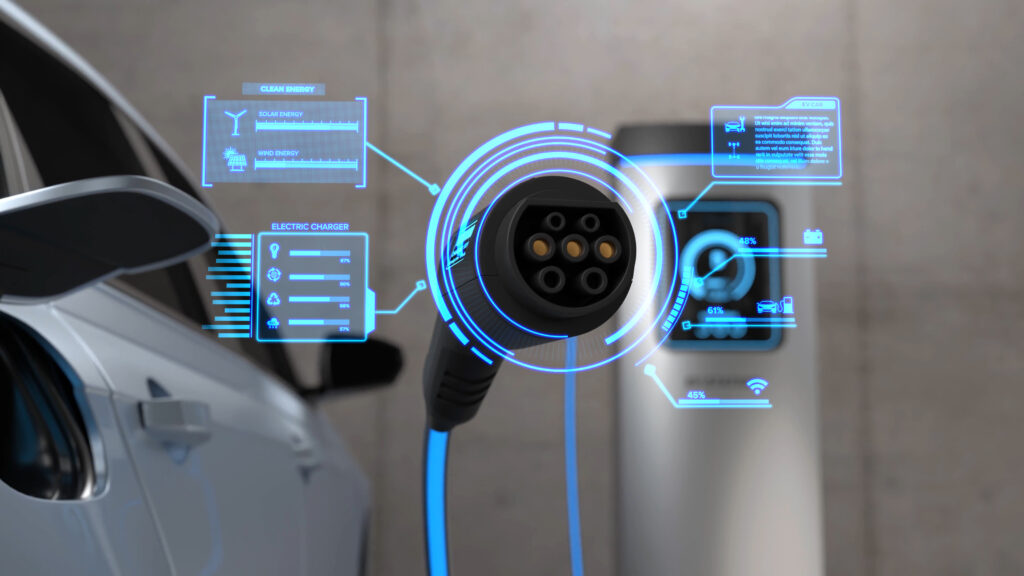
The auto industry is experiencing a revolutionary change whereby, electricity, information, and sustainable innovation are all fused in the creation of the future mobility. Along with this revolution is the powerhouse of the EVs which were previously branded as a niche type of innovation.
1. NEXT GENERATION BATTERY TECHNOLOGY
A major focus of EV innovation is the battery. The latest lithium-ion technology has been good to the industry, but it lacks in energy density, charging rate and life cycle. In the future, there is a solution in the form of solid-state batteries. These promising batteries bring the promise of:
- Energy densities Higher, so to allow greater distances of driving.
- Less demanding charging time that minimizes the downtimes.
- Better safety, because solid electrolytes make fire less hazardous.
Firms such as Toyota, QuantumScapes and BMW are making massive investment in the technology and we are likely to see it commercialized in 2025-2028.
2. ULTRA-FAST CHARGING INFRASTRUCTURE
Another most significant issue affecting EV prospective clients is convenience in charging. In turn, the new stage of development will involve ultra-fast charging points that will provide 300-500 kW, i.e., the possibilities to fill an EV within less than 10 minutes. At the same time, bi-directional charging will also make cars able to give power to the grid or home when grid is called to the maximum, and EVs will become a part of energy management system.
The governments and the private sites are collaborating to develop powerful, expandable charging systems with smart griding capacity. This increases the adoption in addition to being in line with the broader sustainability objectives.
3. INTEGRATION OF ARTIFICIAL INTELLIGENCE AND AUTONOMOUS DRIVING
EVs are not only electric, but they are becoming wheels on computers. By 2025, it will draw a trend of more constraints of AI-assisted autonomous features in EVs. Advanced Driver Assistance Systems (ADAS), real time data processing and AI learning models will allow:
- semi-autonomous – fully autonomous driving.
- Predictive care and diagnostics.
- Traffic and energy consumption-based optimization of route in real-time.
There are brands such as, Tesla, and Rivian that are in the race to ensure EVs are not only clean but also smarter.
4. LIGHT AND SUSTAINABLE MATERIALS
The light weight of a vehicle enhances efficiency of the battery. Future EVs will be made in carbon-fiber composites, recycled aluminum and even biodegradable. Performance is more than performance in this evolution, it is the coming into existence of a circular and a sustainable economy.
Car manufacturers are considering modular EV platforms where the car parts are easily updated or restored to prevent wasting resources and making the vehicle live longer.
5. VEHICLE TO EVERYTHING (V2X) COMMUNICATION
V2X communication is one of the most thrilling trends in EV technology. This is the capability of EVs to communicate with:
- To avoid collisions, other vehicles (V2V).
- Infrastructure (V2I) like traffic lights in order to achieve flow optimization.
- The ones that connect pedestrians (V2P) to increase safety.
- The energy optimization grid (V2G).
V2X will be a new revolution in the transportation system of urban areas replacing traffic jams and transform the transport system to real-time data processing by 5G and edge computing that is going to lead to less energy costs.
6. NEW EV SEGMENTS AND INDIVIDUALIZATION
In 2025, EVs are also going to enter other vehicle categories, electric trucks, commercial cars, and two-wheelers. As mobility-as-a-service (MaaS) approaches, electric delivery and ride-sharing vehicles will become widespread.
Moreover, there is a prospect of the rise of individually customized EVs, which could be tailored regarding the range, performance, etc., as well as interiors. On-demand updates will enable cars to constantly be developed as an endlessly updatable platform.
7. SUSTAINABILITY MANUFACTURING AND LIFECYCLE
The future EVs do not end at the vehicle alone. Much attention is currently paid to full lifecycle management, including raw materials acquisition and end of life recycling. Important events are:
- Responsible and transparent cobalt and lithium supply chains.
- Second-life battery 2. Energy storage 2. Solar energy storage.
- Improved recycling methods in order to recover rare materials.
Consumers will continue to insist that manufacturers are more accountable, not merely in terms of performance but also its impact on the environment and the society.
8. THE ECOSYSTEM OF GLOBAL POLICY AND INVESTMENT
The international community is encouraging people to adopt the use of EVs and policies are pursued on an aggressive front by governments in different countries. Whether it is under zero-emissions requirements or the financing of a green infrastructure, the EV industry is a space which besides being driven by innovation is defined through popular demand and law.
The current leaders in evolution with EVs are Europe and China, but in 2025, the world could look at the upcoming markets like India, Southeast Asia, and Africa, where cheap EVs and distributed solar-charging options will take on the world.
FINAL THOUGHTS: PARADIGM SHIFT IN ACTION
Electric vehicles are not a far-fetched dream of the future, it is already being developed in the labs, the factories and the highways across the globe. The difference between the new wave of EV innovation is that it is linked with the field of sustainability, AI, and infrastructure development. It is more than putting another engine inside the car, it is the transformation of mobility in the world that is connected, data-driven and environmentally aware.
The emerging patterns and technologies are the signs of a further transformation in the approach to technology and transportation in our opinion at Scholarly Summit. Electric cars are currently not just mobility instruments, they have become a stage where sustainability, innovation and a good urban future are considered.