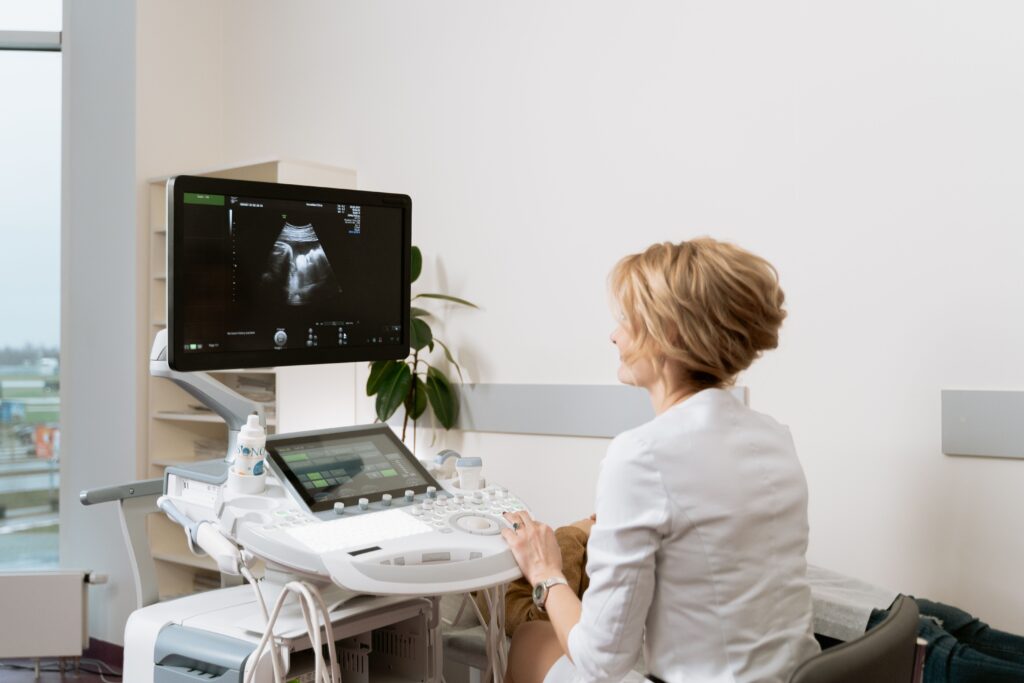
Machine learning in medicine is no longer an experimental frontier. It is an operational reality in diagnostic radiology, pathology, cardiology, and oncology departments at leading medical centres globally. The clinical outcomes being documented, earlier detection of cancers, more accurate classification of complex disease states, and earlier identification of patients at risk of deterioration are not marginal improvements. In several domains, machine learning systems are outperforming individual specialist clinicians on well-defined diagnostic tasks.
Understanding what machine learning actually does in clinical contexts, where the evidence is strongest, where the limitations remain significant, and how the technology is reshaping the practice of medicine requires moving beyond either breathless enthusiasm or reflexive skepticism. This article provides an evidence-grounded overview of artificial intelligence in healthcare diagnostics, drawing on peer-reviewed clinical studies and regulatory authorisation data to construct an accurate picture of the current state.
What Machine Learning Does in Medical Diagnosis
Machine learning in medicine, in its diagnostic applications, functions as a pattern recognition system trained on large labeled datasets. A machine learning algorithm trained on 100,000 annotated chest X-rays develops an internal representation of the visual features that distinguish pneumonia from lung cancer from pulmonary oedema, features that experienced radiologists have spent careers learning to identify but that a well-trained algorithm can extract with consistency and speed that no human can match.
This is not the same as understanding disease. Medical machine learning systems do not reason about pathophysiology. They identify statistical regularities in data that correlate with clinical outcomes. This distinction matters enormously for understanding both where these systems succeed and where they fail.
They succeed when the diagnostic signal is reliably captured in the data modality they were trained on, when the training dataset is representative of the population they will be applied to, and when the task is well-defined enough that “correct” can be objectively specified. They fail, sometimes dangerously, when these conditions are not met: when the patient presentation differs significantly from the training distribution, when the diagnostic signal requires contextual information not in the dataset, or when the ground truth labels in the training data contain systematic errors.
Where the Clinical Evidence Is Strongest
The most robust body of clinical evidence for machine learning in diagnostic medicine exists in medical imaging analysis.
Dermatology and skin cancer detection were among the first domains where machine learning demonstrated clinician-level performance. A landmark 2017 study in Nature by Esteva et al. showed that a convolutional neural network trained on 129,450 clinical images classified skin lesions with accuracy equivalent to 21 board-certified dermatologists. Subsequent studies have refined these findings; current systems show particular strength in early detection of melanoma, where AI-assisted analysis has been shown to reduce missed diagnoses by up to 11 percentage points in randomised trials.
Diabetic retinopathy screening represents one of machine learning’s most mature clinical deployments. The FDA-authorised IDx-DR system was the first AI diagnostic device cleared by the FDA to provide a diagnosis without physician involvement. A pivotal clinical trial published in npj Digital Medicine showed a sensitivity of 87.2% and a specificity of 90.7% for more than mild diabetic retinopathy, performing within the range of specialist ophthalmologists while enabling screening by primary care providers with no ophthalmology training.
Radiology and CT/MRI analysis encompasses the broadest and fastest-growing category. AI-powered diagnostic accuracy in chest CT analysis for pulmonary nodule detection has been extensively validated. A 2019 Google Health study published in Nature Medicine demonstrated that an AI system detected lung cancer in low-dose CT scans with 11.5% fewer false positives and 5% fewer false negatives compared to an average of six radiologists, with performance improving further when the AI and human collaboration were evaluated.
Cardiac imaging and ECG analysis have produced particularly striking results in arrhythmia detection. Stanford’s 2019 study, published in Nature Medicine, showed that a deep learning model trained on 91,232 ECG records diagnosed fourteen types of arrhythmias from single-lead ECG with performance exceeding that of the average board-certified cardiologist across most conditions tested.
Machine Learning in Medicine — Key Clinical Evidence Summary
| Clinical Domain | AI Modality | Key Finding | Comparison | Study / Source |
| Skin cancer detection | CNN on dermatology images | Equivalent to 21 dermatologists | Board-certified specialist panel | Esteva et al., Nature 2017 |
| Diabetic retinopathy | Convolutional neural network | 87.2% sensitivity, 90.7% specificity | Specialist ophthalmologists | npj Digital Medicine 2018 |
| Lung cancer CT screening | 3D CNN on low-dose CT | 11.5% fewer false positives | 6 radiologists averaged | Google Health, Nature Medicine 2019 |
| Arrhythmia detection | Deep learning, 1-lead ECG | Exceeded cardiologist’s average on 11/14 types | Board-certified cardiologists | Rajpurkar et al., Nature Medicine 2019 |
| Breast cancer mammography | Deep learning model | Reduced false negatives by 9.4% | US and UK radiologist panels | McKinney et al., Nature 2020 |
| Sepsis prediction | LSTM on EHR data | 6-hour early warning ahead of clinical criteria | Clinical deterioration teams | UCSF Medical Center, 2021 |
Predictive Analytics and Early Disease Detection
Beyond diagnosis of established conditions, machine learning’s capacity for predictive analytics in healthcare is producing a clinically important capability: identifying patients likely to develop serious conditions before clinical symptoms appear.
Sepsis prediction is the most clinically impactful early-warning application currently deployed at scale. Sepsis is responsible for approximately 11 million deaths annually globally and is responsible for 20% of all global deaths, according to the WHO 2020 data. The condition is highly treatable when identified early, but difficult to recognise in its initial stages, as early symptoms are non-specific. Machine learning models trained on electronic health record data, vital signs, laboratory values, medication administration, and nursing notes have demonstrated the ability to identify patients who will develop sepsis six to twelve hours before clinical criteria are met, providing a critical intervention window.
Early-onset Alzheimer’s prediction using machine learning analysis of speech patterns, gait measurements, and eye-tracking data is in active clinical investigation. Research from Boston University School of Medicine found that NLP analysis of speech samples identified individuals who would later develop Alzheimer’s disease with 82% accuracy, years before clinical diagnosis would be possible through conventional neuropsychological testing.
Cardiovascular risk stratification using ML analysis of retinal photographs, which reflect vascular health throughout the body, has been shown to predict cardiovascular events with accuracy comparable to conventional risk factors, using data that is non-invasively obtainable in routine eye examinations.
For researchers and clinicians advancing work in this domain, the peer-reviewed studies, reviews, and applied research published in the [Journal of Machine Learning](https://scholarlysummit.com/journals/amla) provide both theoretical foundations and clinical application frameworks for this rapidly evolving field.
Clinical Decision Support Systems and the Human-AI Partnership
The most sophisticated and widely adopted deployment of machine learning in clinical medicine is not as a standalone diagnostic system but as a clinical decision support system (CDSS), a tool that augments the physician’s assessment rather than replacing it.
The evidence strongly favours collaborative human-AI approaches over either unaided human or AI-only diagnosis in most contexts. A 2020 study published in Lancet Digital Health examining AI-assisted cancer diagnosis found that human-AI collaboration outperformed both solo AI systems and solo human specialists across the majority of diagnostic tasks studied.
The mechanism is informative: human specialists tend to fail on tasks that require consistent attention to subtle statistical patterns across large datasets, exactly where AI systems perform well. AI systems tend to fail on tasks that require contextual integration of diverse information types, clinical history, and patient-specific factors, exactly where experienced clinicians excel. Combining the two approaches captures benefits from both.
Challenges and Responsible Implementation
The clinical promise of machine learning in medicine must be understood alongside its genuine limitations and risks.
Algorithmic bias represents the most serious equity concern. Machine learning models trained on datasets that systematically underrepresent certain populations, racial minorities, women, elderly patients, and patients from low-income settings perform worse on those populations. The 2019 Science paper by Obermeyer et al. demonstrated that a widely used commercial healthcare algorithm systematically underestimated the healthcare needs of Black patients due to biases embedded in the training data. Bias auditing and diverse training datasets are essential requirements for ethical deployment.
Regulatory pathways are still developing. The FDA’s Software as a Medical Device (SaMD) framework provides a pathway for AI diagnostic tools but is still adapting to the challenge of regulating systems that continuously learn and may drift from their validated performance characteristics over time.
Healthcare data privacy, the necessary fuel for machine learning model development, raises fundamental questions about patient consent, data sovereignty, and the commercial exploitation of sensitive health information. GDPR in Europe and HIPAA in the United States provide foundational frameworks but are not fully adequate to the specific challenges of large-scale medical AI development.
FAQs – Frequently Asked Questions
1: Is machine learning in medicine accurate enough to be trusted?
In well-validated, well-defined diagnostic tasks, particularly medical imaging, FDA-authorised and CE-marked systems have demonstrated accuracy comparable to or exceeding that of specialist clinicians. Accuracy varies significantly by task, population, and deployment context. Independent validation in the deployment population is essential before clinical trust is warranted.
2: Does AI in healthcare eliminate the need for doctors?
No. The evidence consistently shows that human-AI collaboration outperforms either alone in most diagnostic contexts. AI handles high-volume pattern recognition and consistency; clinicians handle contextual integration, communication, and the irreducibly human dimensions of care.
3: What is algorithmic bias in medical AI and why does it matter?
Algorithmic bias occurs when a model performs differently across patient subgroups because the training data did not adequately represent all groups. In medicine, this can mean less accurate diagnosis or inappropriate risk stratification for underrepresented populations, directly translating to health outcome disparities.
4: What conditions is machine learning best at diagnosing currently?
The strongest clinical evidence exists for diabetic retinopathy, skin cancer (especially melanoma), pulmonary nodules on CT, cardiac arrhythmias from ECG, and breast cancer on mammography. These share common characteristics: well-defined diagnostic criteria, large labeled training datasets, and reliable capture of diagnostic signals in the data modality.
Further Reading
Read more in our Journal of Machine Learning for deeper scholarly exploration of this topic.