
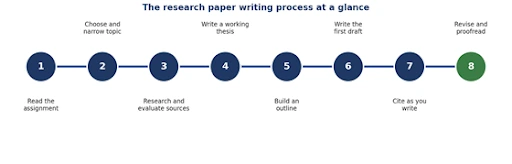
To write a research paper, read the assignment, narrow your topic, research and evaluate sources, draft a thesis statement, outline, write a first draft, cite as you go, then revise and proofread. Expect several drafts, and keep your notes and citation details organized from day one.
Learning how to write a research paper starts with one reassuring fact: it is a process, not one giant act of writing. You pick a focused topic, research it, build an argument, draft, cite, and revise. Done in that order, a research paper becomes a series of small, doable tasks. This guide walks beginners and college students through each task, including the formatting rules and the mistakes that cost marks.
What Is a Research Paper?
If you are asking what is a research paper, it is academic writing that presents your own argument or analysis, backed by evidence from credible sources. Unlike a summary, it takes a position. Unlike a lab report, it usually works with existing data instead of generating new data (Adobe Acrobat).
Research paper writing is part research, part argument, and part careful reporting. Many colleges assign a research paper for college to test subject knowledge and research skills (Grammarly), so knowing how to write a research paper pays off well beyond one assignment. The same steps also work if you are learning how to write a research essay, and journal-style papers simply add sections such as methods and results.
How to Write a Research Paper? 8 Steps To Follow
These are the steps in writing a research paper, in the order most writers find easiest. Treat them as a loop, not a straight line: new research may change your thesis, and that is normal.
Step 1. Read the assignment closely
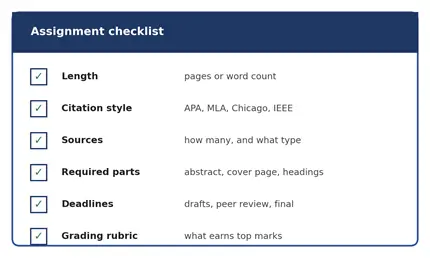
Most lost marks start here. Note the length, citation style, number of sources, required sections, and the grading rubric. Ask your instructor early if anything is unclear, because many students begin drafting before checking whether an abstract or cover page is required (Grammarly).
Step 2. Choose and narrow your topic
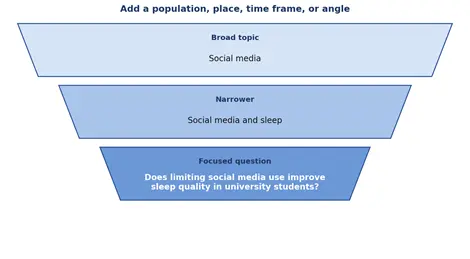
Pick a topic you can stay curious about for weeks. It needs enough sources to support real analysis, yet be narrow enough to cover properly. Fix a broad topic by adding a population, place, time frame, or angle. Skimming one or two recent review articles shows which questions researchers are still debating.
If you are stuck on how to start a research paper, turn your topic into a question you can actually answer.
Step 3. Research and evaluate sources
Here is how to do research without drowning. Start with encyclopedias, reports, and review articles for an overview, then move to peer-reviewed articles through your library databases and Google Scholar. Librarians can save hours, so ask them (Adobe Acrobat). Know the difference between primary sources, which give original data such as interviews or reports, and secondary sources, which add commentary and interpretation. Most papers use both.
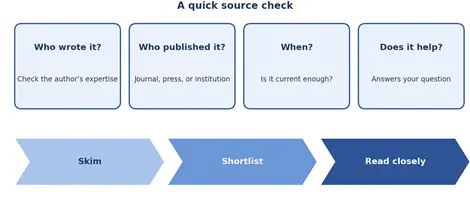
Check who wrote each source, who published it, and when. Skim first and read closely only what survives. Record full citation details and page numbers as you read, and consider a reference manager such as Zotero.
Step 4. Write a working thesis statement
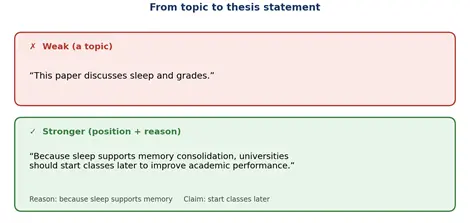
A thesis statement is the central, arguable claim of your paper. It takes a position instead of announcing a topic. Treat it as a working version, because your research will sharpen it. A useful trick is to phrase the topic as a question, then answer it (Grammarly). Test the result: could a reasonable reader disagree? If not, you probably have a fact, not a thesis.
Step 5. Build an outline
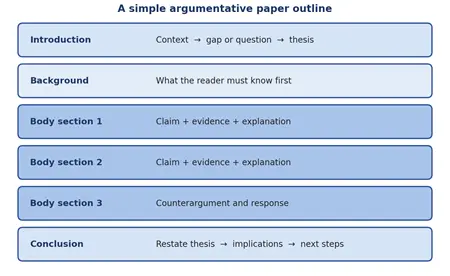
List your main sections, put them in a logical order, and slot in the evidence for each. Fixing structure now is far cheaper than after 3,000 words. This is also how to structure a research paper: introduction, background, body sections organized by idea rather than by source, then conclusion.
Synthesize instead of summarizing. Group sources by what they claim and note where they agree or clash (Adobe Acrobat).
Step 6. Write the first draft
Write quickly and imperfectly. Anyone who knows how to write a research paper well will tell you a first draft is allowed to be messy. The research writing process rewards momentum, and you can polish later. Open with context, narrow to your thesis, and end the introduction with it. Skip openers such as “Since the dawn of time” (Adobe Acrobat).
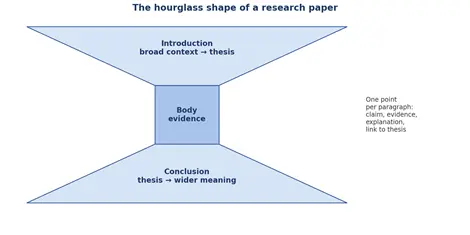
In the body, give each paragraph one point: claim, evidence, explanation, then a link back to the thesis. In the conclusion, restate the thesis, summarize the argument, and suggest implications. Add no new evidence.
A sample body paragraph runs like this: state the claim, present one piece of evidence, explain why it matters, and tie it back to the thesis. If a paragraph makes two points, split it.
Step 7. Cite as you write
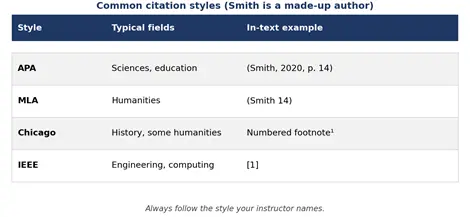
Cite while drafting, not at the end. Follow the style your instructor names, and paraphrase more than you quote. Every borrowed idea needs attribution, even a general claim like “experts agree.” Keep a running reference list with page numbers, and use direct quotes sparingly, only when the exact wording matters (Adobe Acrobat). Before submitting, match every in-text citation to your reference list.
Step 8. Revise, edit, and proofread
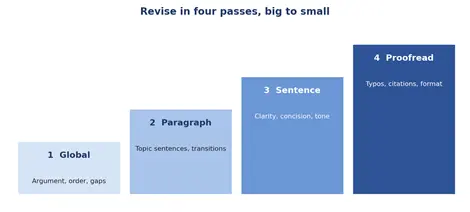
Revise in passes. First check the argument and structure, then paragraphs and transitions, then sentences, and finally typos. Let the draft rest overnight, read it aloud, and ask a peer or writing center for feedback (Grammarly; Adobe Acrobat). Cut anything that does not support your thesis. A reverse outline also helps: write one sentence per paragraph, then check the order and look for gaps.
If you use AI tools, check your course policy first. Use them for brainstorming or grammar, never to invent sources, and verify that every reference exists. You remain responsible for every claim, and you should disclose AI use when your institution requires it.
Research Paper Format, Length, and Layout
Your research paper format depends on your course and style guide, so follow the assignment first. A common student default is 12-point Times New Roman, double spacing, 1-inch margins, and page numbers at the top right. Many instructors also prefer a PDF submission (Adobe Acrobat).
The format of a research paper typically includes a title, an abstract if required, a body with headings, and a reference list. For how to format a research paper in Word, use the Layout, Paragraph, and Insert tabs shown below. The same rules apply to any research paper format for students unless your instructor says otherwise. Journal submissions follow a research article format, so read the author guidelines before you start. As a last check on how to prepare a research paper for submission, confirm the file type, page numbers, and reference list.
How long should a research paper be? Check the assignment. Typical papers run about 4,000 to 6,000 words, though 2,000 and 10,000 both occur (Grammarly). As for how many pages should a research paper be, a semester paper is often 10 to 12 pages and a journal article 20 to 25 (Adobe Acrobat). Double-spaced pages hold roughly 250 to 300 words.
How to Write a Research Paper When Time Is Short?
Plan backward from the deadline. A common rule of thumb gives about a third of your time to research and outlining, a third to drafting, and a third to revision, because revision is where most papers improve. For a three-week deadline, that means week one for research and a thesis, week two for an outline and first draft, and week three for revising, formatting, and proofreading.
With only a few days, shrink the topic instead of skipping steps. Making a research paper under pressure is mostly about cutting scope, not cutting revision.
Wrapping Up
A strong paper comes from steady habits: a narrow question, honest evidence, early citations, and patient revision. If you need help with writing a research paper, your instructor, writing center, and librarian are the best free places to start. You now know how to write a research paper from the first question to the final proofread, so begin with Step 1 today.
Frequently Asked Questions
Read the assignment carefully for length, format, sources, and citation style. Then choose and narrow a topic.
Most papers use an introduction, body sections, and a conclusion. Empirical papers add methods, results, and discussion.
Check the rubric, because requirements vary widely. Quality and relevance matter more than quantity.
Use the style of your instructor’s name. APA is common in sciences and education, MLA in humanities.
Follow the journal’s author guidelines for sections, length, and references. Expect methods, results, and discussion sections.
Only if your course allows it. Verify every reference and disclose use when required.