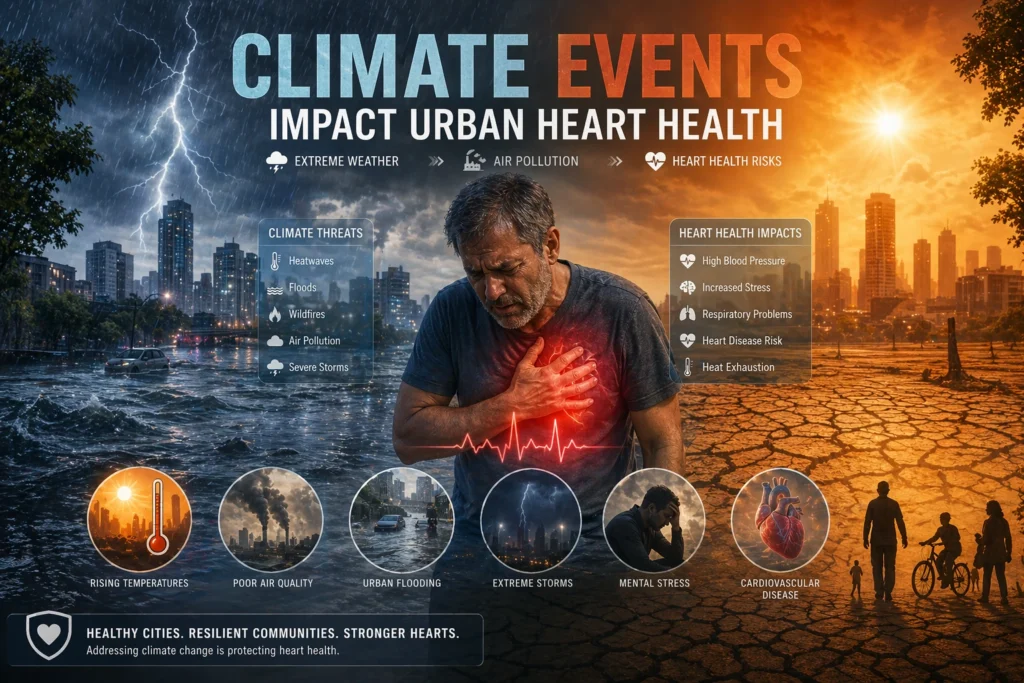
Cities are built for speed, growth, and opportunity. But they are also becoming hotspots for environmental stress. Rising temperatures, air pollution, and unpredictable weather patterns are putting increasing pressure on human health, especially the heart. This growing connection between climate and cardiovascular conditions is often described as the Climate CVD nexus.
In this blog, we explore how Urban Heart Health is affected by extreme climate conditions, why city populations are more vulnerable, and what can be done to build stronger, healthier urban environments.
Understanding Urban Heart Health in a Changing Climate
Urban Heart Health refers to the cardiovascular well-being of people living in cities. Urban environments already expose individuals to stress, pollution, and limited green spaces. When combined with extreme climate events, these conditions can significantly increase health risks.
Climate change is not just about rising temperatures. It also includes erratic weather, prolonged heatwaves, increased air pollution, and sudden temperature shifts. All these factors influence climate change and cardiovascular health, often in ways that are underestimated.
Heatwaves and the Rising Risk of Heart Failure
One of the most visible climate-related threats is extreme heat. Heatwaves are becoming more frequent and intense, especially in densely populated cities.During extreme heat, the body works harder to cool itself. This leads to thermoregulation stress, where the heart must pump more blood to the skin to release heat. For people with existing heart conditions, this extra workload can be dangerous.
This is why heatwave related heart failure cases are increasing globally. Hospitals often report spikes in heart failure hospitalization rates during prolonged hot periods. Another hidden risk is nocturnal heat exposure. When nights remain hot, the body doesn’t get enough time to recover. This continuous strain increases cardiovascular stress and disrupts normal heart function.
Urban Heat Islands and Cardiovascular Risk
Cities are often warmer than surrounding rural areas. This is due to concrete buildings, asphalt roads, and lack of vegetation. This effect is known as the urban heat island cardiovascular risk. In such environments, temperatures remain high even after sunset. This prolonged exposure pushes the body beyond its physiological heat threshold, increasing the risk of heart-related complications.
The duration of climate exposure matters just as much as intensity. Even moderate heat, when experienced over long periods, can lead to temperature fluctuation, mortality and long-term cardiovascular damage.
Air Pollution: A Silent Trigger for Heart Attacks
Air quality is another major concern in cities. Pollutants like particulate matter 2.5 (PM2.5) and ozone are known to harm the cardiovascular system. Exposure to polluted air leads to systemic inflammation markers in the body. This inflammation affects blood vessels, increases blood pressure, and raises the risk of clot formation.
This is why environmental triggers for heart attacks are becoming more common in urban areas. Studies show a direct link between poor air quality and increased myocardial infarction incidence. The impact of ozone on heart health is particularly concerning. Ozone exposure can reduce lung function and strain the heart, especially in older adults and people with pre-existing conditions.
Compounding Environmental Stressors in Cities
Urban residents are rarely exposed to just one risk factor. Instead, they face compounding environmental stressors.
For example:
- A hot day combined with high pollution levels
- Sudden temperature changes after a heatwave
- High humidity along with poor air circulation
These combined factors intensify the autonomic nervous system response, which controls heart rate and blood pressure. When this system is overstimulated, it can trigger irregular heart rhythms and increase the risk of cardiac events. This is why environmental underestimation is a serious issue. Many people do not realize how multiple small stressors can combine into a major health risk.
Vulnerable Populations in Urban Areas
Not everyone is affected equally. Certain groups face higher cardiovascular vulnerability in cities.
These include:
- Elderly individuals
- People with pre-existing heart conditions
- Low-income communities
- Outdoor workers
- Individuals with limited access to healthcare
These groups often live in areas with higher pollution and fewer cooling resources. This creates a gap in urban heart health equity. Vulnerable urban populations are also less likely to have access to preventive care, making early detection and management more difficult.
The Role of Climate-Sensitive Disease Management
As climate risks increase, healthcare systems must adapt. This is where climate sensitive disease management becomes essential. Doctors and public health experts are now considering environmental conditions when treating cardiovascular patients.
For example:
- Monitoring patients during heatwaves
- Adjusting medications based on temperature
- Providing early warnings during pollution spikes
This approach supports proactive operational health decisions, helping reduce emergency cases and hospital overload.
Public Health and Climate Resilience
Building public health climate resilience is key to protecting urban populations. This means preparing cities and healthcare systems for climate-related health risks.
Strategies include:
- Heatwave alert systems
- Public cooling centers
- Air quality monitoring
- Community awareness programs
These measures help reduce the immediate extreme climate events impact on heart health.
Sustainable Urban Health Infrastructure
Long-term solutions require investment in sustainable urban health infrastructure.
This includes:
- Green buildings that reduce heat absorption
- Improved ventilation systems
- Smart urban planning
- Access to clean energy
One effective solution is increasing green space mitigation. Parks, trees, and green roofs help lower temperatures and improve air quality. They also promote physical activity, which supports overall heart health resilience.
The Science Behind Climate and Heart Health
Understanding the biological link between climate and cardiovascular health is crucial. When exposed to extreme heat or pollution, the body reacts in several ways:
- Increased heart rate
- Dehydration
- Thickened blood
- Elevated blood pressure
These responses are part of the body’s survival mechanism. However, prolonged exposure leads to damage. The bio-meteorological risk assessment approach helps scientists study how weather conditions affect human health. This field is becoming increasingly important in predicting and preventing cardiovascular events.
Long-Term Impact on Urban Health
The effects of climate change are not limited to immediate health events. They also influence long-term wellness in dense environments.
Repeated exposure to environmental stress can lead to:
- Chronic heart disease
- Reduced life expectancy
- Increased healthcare costs
The climate change and cardiovascular health relationship is expected to grow stronger in the coming years, especially in rapidly expanding cities.
Bridging the Gap: Awareness and Action
One of the biggest challenges is awareness. Many people still do not connect climate conditions with heart health.
Addressing this requires:
- Public education campaigns
- Community engagement
- Policy-level interventions
Reducing environmental underestimation can empower individuals to take preventive steps.
Practical Steps to Protect Urban Heart Health
While large-scale solutions are important, individuals can also take action.
Here are simple ways to protect your heart in urban environments:
1. Stay Hydrated
Water helps regulate body temperature and supports heart function.
2. Avoid Peak Heat Hours
Limit outdoor activity during extreme heat to reduce thermoregulation stress.
3. Monitor Air Quality
Use apps or local updates to avoid exposure to high particulate matter 2.5 (PM2.5) levels.
4. Create Cooler Indoor Spaces
Use fans, curtains, and ventilation to reduce indoor heat.
5. Seek Medical Advice
If you have heart conditions, consult doctors about managing risks during extreme weather.
The Future of Urban Heart Health
Looking ahead, cities must evolve to address the Climate CVD nexus. This requires collaboration between governments, healthcare systems, and communities.
Future strategies may include:
- AI-based health monitoring
- Climate-responsive urban design
- Integrated health and environmental data systems
These innovations can support heart health resilience and reduce the burden of climate-related diseases.
Conclusion
The connection between climate and cardiovascular health is no longer a distant concern. It is a present-day reality, especially in urban environments.From heatwave related heart failure to pollution-driven myocardial infarction incidence, the risks are growing. The combination of compounding environmental stressors, limited resources, and rising temperatures is putting millions at risk.
However, with the right strategies, such as public health climate resilience, sustainable urban health infrastructure, and climate sensitive disease management—we can protect and improve Urban Heart Health.The key lies in awareness, preparedness, and action. Cities must not only grow, they must adapt, innovate, and prioritize health in a changing climate.